
- SPECS targets full spatial computing on AR glasses rather than competing in the lighter AI smart glasses arena.
- Snap target long term vision with these AR glasses and refinement overtime on form factor and pricing could help the overall AR industry with volumes.
Company behind Instagram unveiled Meta glasses a couple of years back. Now, the company behind Snapchat utilized the Augmented World Expo 2026 and announced SPECS, a one of a kind AR glasses. It may appear that these two are competing with their respective products but it is far from reality.
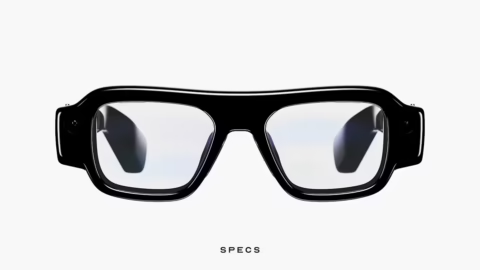
Image 1: Snap SPECS, Source: Snap Newsroom
A Closer Look at Snap SPECS
To give you a brief about SPECS, it is an AR glass which has been designed for daily use. There is an option to insert or remove prescription lenses. The display system is liquid crystal on silicon technology with 51 degree field of view and 16 million colors. Snap claims the short distance display can feel like a 24-inch desktop and can also feel like a 115 inch home cinema 10 feet away. The lenses are electrochromic in nature and it shifts from clear to tinted in 10 seconds using the same tech found in Boeing 787 Dreamliner windows. It is priced at $2,195 and is expected to ship this fall as the preorders are open.
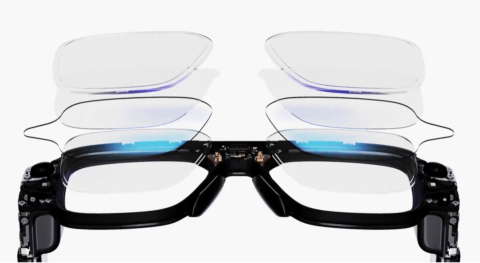
Image 2: SPECS glasses multiple layer with a removable prescription lens option, Source: Snap Newsroom
Spatial Computing vs. AI Smart Glasses
The most important point to note here is that it is not AI smart glasses and does not compete with the likes of RayBan Meta glasses including the display ones, despite some use cases matching. They fall into a different category according to Smart Analytics Global (SAG). AR smart glasses focus on full spatial computing, with primary use cases centered on immersive content viewing and virtual display experiences.
Looking at the Numbers: The Wearable Ecosystem
AR smart glasses continue to operate at a limited scale. SAG estimates global shipments remain below 2 million units in 2025, underscoring their position as a niche segment within the broader wearable ecosystem.
In comparison, SAG estimates AI smart glasses reached around 8.5 million units in 2025, generating approximately US$2.3 billion in revenue, highlighting a much larger and faster-scaling market. On the other hand, VR and MR head mounting display shipment was below 5 million in 2025, per SAG.
The scenario is clear: AR glasses sit below both the AI as well as VR/MR categories. Despite years of development, AR glasses still face persistent barriers, including high cost structures, limited everyday use cases, and hardware constraints in optics and battery.
The Verdict: Mind Share Over Volume
The SPEC is the closest AR form factor which can go mainstream, it has a lot of interesting use cases like using it as a laptop screen, watching movies on a big screen, imagining home interior using the AR interface, navigation, etc. All these are attractive enough to keep the category hot but still has some problems.
One, the weight is 132 gms and 136 gms for different sizes which is higher for a person to wear it for long term. For relative comparison, Xreal AR glasses weigh between 72 to 88gm. Another factor is the design. While the design looks very similar to normal glasses as standalone, when wore, the stem of the glasses look quite oversized. Third, the price. The device is priced close to USD 2200.
At this price, mostly the AR geeks, developers, and ultra rich society would be going for it. Hence we believe Snap will be super successful in gaining the mind share but might not grab high volumes. However, we value it as an important milestone and starting point. Refinement on top of this iteration in terms of price and form factor over the long term holds a lot of potential.