
On April 20, in addition to new smartphones that has been covered in the blog post yesterday, Huawei has also launched a new range of wearable products, including the Huawei Watch Fit 5 series, the premium Huawei Watch Ultimate Design model, the updated Huawei WatchBuds 2, and its latest AI smart glasses. The portfolio reflects Huawei’s continued investment across mass, premium, and emerging wearable categories.
True Smartwatch Portfolio Continues to Drive Scale
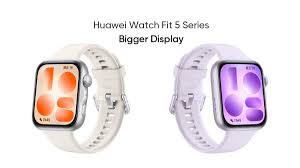
Huawei’s smartwatch lineup remains the core growth engine of its wearable business. The Watch Fit 5 and Fit 5 Pro introduce upgraded bigger display, more health sensors, as well as improved positioning and connectivity technologies. Pricing remains stable for the Pro model, while the base model sees a slight increase, reflecting ongoing feature enhancements and cost pressure.
According to Huawei, the cumulative shipments of the Watch Fit series have reached around 24 million units globally. SAG tracked the Fit series accounted for approximately 30% of Huawei’s true smartwatch shipments in 2025, doubling from around 15% in 2024. It has become Huawei’s second-largest smartwatch family after the GT series, highlighting strong consumer acceptance in the mid-range segment.
Image 1: Huawei Watch Fit 5 and Fit 5 Pro
In addition to the Fit series, Huawei introduced the Watch Ultimate Design, a luxury smartwatch targeting female users with a price point around RMB 30,000 (US$4412). This product signals Huawei’s ambition to expand into the ultra-premium segment and strengthen brand equity, although it is not expected to contribute meaningful shipment volumes.
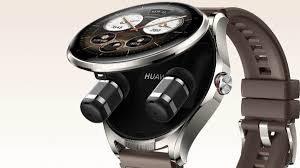
The updated WatchBuds 2 further demonstrates Huawei’s willingness to explore differentiated form factors. By combining a smartwatch with embedded earbuds, the product targets sports users and frequent travelers who value convenience and portability. While innovative, its higher price compared to traditional smartwatches limits its mass-market potential.
Image 2: Huawei WatchBuds 2
SAG expects Huawei to continue gaining share in the true smartwatch segment through 2026 and 2027, even as the overall wrist wearable market declines at a low single-digit rate in 2026.
AI Smart Glasses Face Ecosystem and Scale Challenges
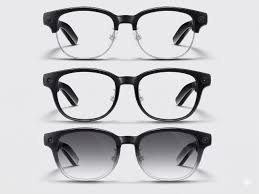
Huawei’s latest AI smart glasses represent a step forward in hardware capability, moving from an audio-only product to one that includes camera and video functions. These upgrades enable a range of practical user scenarios, including hands-free photo and video capture, object recognition, and mobile payment interactions.
However, the product faces several limitations. Functionality is partially restricted on iOS and Android devices, making HarmonyOS users the primary target audience. Pricing at RMB 2,099–2,199 (US$309-323) is relatively high compared to competing products with similar capabilities, while frame materials and design options remain limited / less attractive, compared with predecessor Eyewear 2 AI smart glasses.
Image 3: Huawei AI smart glasses
From a market perspective, AI smart glasses remain a challenging category for Huawei. Based on SAG tracking, the company is expected to maintain a low single-digit global market share in 2026. In China, Huawei will continue to trail competitors such as Xiaomi and Rokid. Broader barriers, including ecosystem maturity, OS compatibility, and distribution channels, will continue to constrain scale.
Conclusion: Smartwatches Lead, AI Smart Glasses Lag
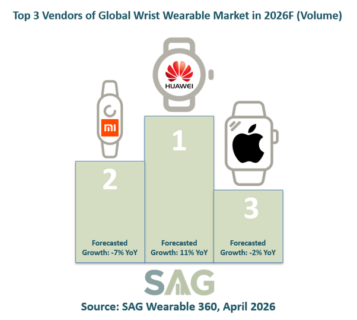
SAG forecasts that Huawei will remain the largest global vendor in wrist wearables (including true smartwatches, basic bands, and non-display bands, per SAG definition) by shipment volume in 2026, with around 25% market share globally.
Exhibit 1: SAG Global Wrist Wearables Vendor Share Forecast in 2026
The latest smartwatch launches will further strengthen Huawei’s leadership position, supported by strong performance from the Fit series and continued portfolio expansion across price tiers. At the same time, AI smart glasses will remain a more difficult segment to scale in the near term. While the category offers promising user cases such as hands-free capture and contextual intelligence, ecosystem limitations and channel challenges will continue to act as key barriers.
Overall, Huawei’s strategy reflects a balanced approach between scaling core categories and investing in emerging form factors, with smartwatches driving near-term growth and AI smart glasses representing a longer-term opportunity.
Clients please click here to access the SAG AI smartphone glasses forecast report, and here to access the SAG wrist wearables forecast report.