
On April 20, Huawei hosted a major launch event in China, unveiling the new Pura 90 series alongside the Pura X Max. Smart Analytics Global (SAG) followed the event closely and views this launch as a critical inflection point for both Huawei’s flagship strategy and the broader evolution of foldable smartphones.
From SAG’s perspective, three themes stand out:
First, the Pura 90 series represent a well-executed reset of Huawei’s flagship positioning, with clearer segmentation, improved ecosystem readiness, and a more competitive pricing strategy that should help restore momentum.
Second, the Pura X Max highlights Huawei’s continued leadership in foldable innovation, particularly in advancing the wide fold form factor, even if near-term adoption may be constrained by pricing.
Third, the broader foldable market is entering a new phase, where wide form factors are expected to gain traction and reshape competitive dynamics over the next two to three years.
Pura 90 Series: A Return to Flagship Momentum
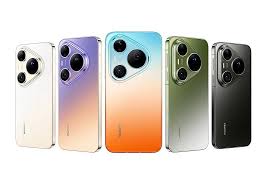
SAG expects the Pura 90 series to emerge as a hero flagship lineup, reversing the underperformance of the Pura 80 series and potentially matching or even exceeding the lifecycle volumes of the Pura 70 series. A key driver behind this shift is Huawei’s decision to simplify and clarify its product portfolio. Instead of offering a fragmented lineup with overlapping positioning, the Pura 90 series is streamlined into three models with clearly defined user segments.
The base Pura 90 targets younger users and aims to upgrade Nova series customers, with a stronger focus on selfie performance and social content creation. In contrast, the Pura 90 Pro and Pura 90 Max shift the focus toward rear camera capabilities, targeting users who prioritize content production and a more balanced imaging experience. The Pura 90 Max, in particular, stands out with its 200MP periscope telephoto lens, positioning it strongly for video enthusiasts. Combined with enhancements such as faster charging and a larger display, the Pro Max model reinforces a premium user experience. This clearer segmentation helps reduce internal competition and avoids the blurred boundaries seen in the previous generation.
Another critical improvement comes from the maturity of the HarmonyOS ecosystem. The Pura 80 series adopted an early version of the pure HarmonyOS platform, which faced notable challenges in third-party app compatibility and overall user experience. With HarmonyOS 6.1, these issues have been significantly alleviated. Huawei has improved software compatibility, enhanced system stability, and expanded developer support. The company also reported that HarmonyOS has reached 55 million active users, signaling growing ecosystem traction and readiness to support flagship devices.
Pricing strategy is another area where Huawei has made a decisive adjustment. While some hardware elements have been scaled back compared to the Pura 80 series, including certain camera features, the removal of 3D face ID, and changes in charging specifications, these trade-offs are offset by more competitive pricing. The base Pura 90 maintains its starting price at RMB 4,699 (USD 650), while the Pro and Pro Max models see meaningful price reductions of RMB 1,000 to 3,500 (USD 140–490) under comparable configurations. This is particularly notable given that Huawei indicated bill-of-material costs have increased by around RMB 1,500 (USD 210) due to rising memory prices. SAG views this pricing approach as a deliberate move to stimulate demand, especially in the Pro tiers, and to regain share from competing Android vendors in 2026.
Image 1: Huawei Pura 90 Pro Max
Pura X Max: Bold Innovation with Strategic Trade-offs
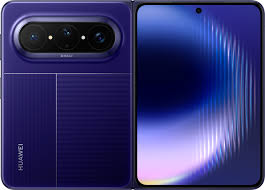
Alongside the flagship lineup, Huawei introduced the Pura X Max, marking a meaningful step forward in its exploration of the wide fold smartphone category. From SAG’s perspective, the form factor direction is well justified. Wide fold designs are more aligned with content consumption and productivity use cases, and Huawei’s move here represents a proactive effort to test the waters ahead of broader industry adoption.
At the same time, this shift comes with trade-offs in user experience and positioning. Compared with the original Pura X, which emphasized compactness and ease of one-hand use, the Pura X Max adopts a larger form factor that prioritizes screen size and immersion. While this enhances viewing and content creation scenarios, it may reduce appeal among users who value portability and lightweight design, particularly female consumers who were an important audience for the Pura X. As such, SAG believes Huawei should continue to invest in and evolve the wide flip form factor in parallel, maintaining a more diversified approach to address different user needs.
From a product perspective, the Pura X Max is a well-executed device. Upgrades such as the dual 80MP front camera and the unified 16:10 display ratio across both internal and external screens reflect thoughtful improvements that enhance both hardware capability and software consistency. These elements point clearly toward the future direction of foldable smartphones, where usability and content optimization become increasingly important.
However, pricing remains a key constraint to scale. The Pura X Max starts at RMB 10,999 (USD 1,530), significantly higher than the RMB 7,499 (USD 1,040) starting price of the Pura X. While Huawei has built strong brand equity in China and continues to strengthen its position in the global premium smartphone segment, its pricing power is still not on par with Apple. As a result, the current pricing strategy may be somewhat aggressive and could limit broader adoption in the near term.
Overall, SAG views the Pura X Max as a strong product that effectively signals the future direction of foldables. It plays an important strategic role in validating the wide fold category, even if near-term volumes are constrained.
Image 2: Huawei Pura X Max
Foldable Strategy and Market Outlook: Full Portfolio Leadership Meets Rising Competition
Looking ahead, SAG expects Huawei to launch the Pura X 2 in the second half of 2026, further strengthening its foldable lineup. Huawei is already the first vendor globally to offer a complete portfolio across all four major foldable form factors, including big fold, small flip, wide fold, and wide flip, positioning it at the forefront of innovation and segmentation in the foldable smartphone market.
This full-portfolio coverage represents a meaningful strategic milestone. While most competitors remain focused on one or two designs, Huawei’s comprehensive approach allows it to address a broader range of user preferences and use cases, from compact and fashion-oriented devices to productivity-driven large-screen experiences. In doing so, Huawei is not only expanding its product lineup but also actively shaping the direction and segmentation of the foldable smartphone market.
SAG forecasts that Huawei will maintain its position as the second-largest foldable smartphone vendor globally in 2026, with approximately 25% market share, following Samsung. In China, Huawei is expected to further solidify its leadership, with market share reaching around 54%. However, this leadership will increasingly come under pressure as the competitive landscape evolves.
The anticipated entry of Apple into foldables, alongside continued expansion from Chinese OEMs, will intensify competition and accelerate innovation across the segment. As more players introduce new form factors and refine their strategies, Huawei’s early-mover advantage will gradually narrow. The next phase of competition will be defined not only by hardware innovation, but also by ecosystem strength, pricing power, and global channel execution.
SAG Perspective: Wide Fold as the Next Growth Engine
SAG believes that wide fold and wide flip form factors are better aligned with natural human viewing behavior. Their display ratios, often close to 16:10, are more suitable for content consumption and productivity, resembling familiar formats such as tablets, PCs, and even A4-sized layouts. In contrast, traditional big fold and small flip designs involve compromises in usability, either being too large when unfolded or too narrow in aspect ratio.
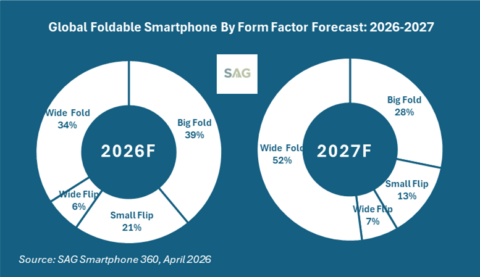
As a result, SAG expects wide fold devices to gain significant traction over the next two years. By 2027, this category is projected to account for over 50% of total foldable smartphone volumes. The segment is likely to attract increasing participation from major players, driving innovation, competition, and broader consumer adoption.
Exhibit 1: SAG Global Foldable Smartphone by Form Factor Forecast: 2026F-2027F
SAG Takeaway and Conclusion
Huawei continues to position itself as a pioneer in foldable smartphone innovation, pushing the boundaries across multiple form factors. The Pura 90 series represent a well-executed reset of its flagship strategy, combining clearer product positioning, improved ecosystem readiness, and more competitive pricing. At the same time, the Pura X Max reflects Huawei’s willingness to experiment and lead in emerging categories, even if near-term adoption remains constrained by pricing.
Looking ahead, the foldable smartphone market is entering a new phase of diversification and competition. With wide form factors gaining momentum and more players entering the space, the next two to three years are likely to reshape the market in a meaningful way. SAG expects this evolution to drive both innovation and growth, ultimately benefiting the broader ecosystem.
Clients please click here to access the published report, covering global foldable smartphone by vendor by form factor by region / country forecast numbers through 2027.