
Smart rings are evolving beyond traditional health and fitness tracking. Recent innovations from AINA, Even Realities and Rokid suggest that AI could unlock new applications, transforming smart rings into wearable controllers, notification interfaces and personal AI companions.
While these emerging use cases remain at an early stage of commercial adoption, they highlight how the boundaries between wearables and personal AI devices are increasingly blurring.
Key Takeaways
- Beyond health tracking: Smart rings are expanding into AI interaction, notifications, device control and personal assistance, creating new opportunities beyond traditional health monitoring.
- AINA introduces a display-equipped AI ring: Featuring an OLED display and joystick-style controls, AINA enables notifications, AI-agent interactions and task approvals directly from the finger. Commercial shipments are expected in January 2027.
- New approaches to wearable AI: Even Realities and Rokid are introducing smart rings as AI-glasses controllers, while Meta’s upcoming Muse Charm explores a larger display and standalone 5G connectivity, potentially enabling more independent personal AI applications.
- Personal AI devices gaining momentum: SAG forecasts global personal AI device shipments to approach 8M in 2028. These devices are unlikely to replace smartphones but could increasingly compete for consumers’ time, attention and daily interactions.
AINA AI Ring: Bringing AI Interaction and Notifications to the Finger
The newly unveiled AINA AI Ring offers an interesting example of how smart rings could evolve beyond their traditional health-monitoring role.
Image 1: AINA AI Ring
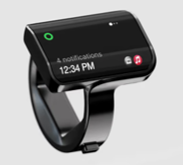
Unlike conventional smart rings, AINA integrates a small OLED display, joystick-style controls, a microphone and a speaker, enabling users to interact with AI agents and receive contextual information directly on their fingers.
Its potential applications include viewing notifications, reviewing AI-generated suggestions, approving or rejecting AI-agent actions and controlling connected devices.
AINA is initially designed to work with iPhones and Macs, without standalone cellular connectivity. Its introductory price is US$399 (regular price US$499), with commercial availability expected in January 2027.
SAG believes AINA illustrates a potentially important direction for smart rings: moving from passive data collection toward active AI interaction and task management.
However, whether consumers will embrace a small display and AI controls on their fingers remains to be seen. Comfort, battery life, interface usability and the reliability of AI-agent functions will be important factors influencing adoption.
Even Realities and Rokid: Smart Rings Become AI Glasses Controllers
Another emerging application is using smart rings as controllers for AI glasses.
Even Realities and Rokid have introduced ring-based interaction solutions, enabling users to navigate compatible smart glasses through discreet finger movements rather than relying entirely on voice commands or touch controls on the glasses themselves.
Rokid Ring, introduced in October 2026 with a starting price of RMB 998 (US$150), supports gesture-based interactions within Rokid’s AI glasses ecosystem.
Image 2: Rokid Ring
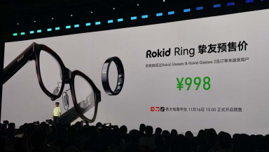
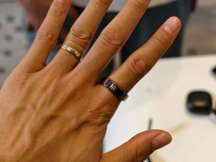
These developments suggest that smart rings could become an increasingly useful component of broader wearable ecosystems, combining AI glasses for information display and smart rings for convenient input and navigation.
Rather than operating independently, multiple wearable devices could work together to deliver more intuitive, context-aware AI experiences.
From AINA to Muse Charm: The Boundaries Between Wearables and Personal AI Devices Are Blurring
Traditionally, smart rings have been classified primarily as health and fitness monitoring devices. However, AI-powered interaction, proactive notifications and personal assistance are introducing new functional characteristics that overlap with the emerging personal AI device category.
Meta’s upcoming Muse Charm provides another example of this evolution.
Image 3: Meta Muse Charm

Unlike AINA, which depends on an iPhone or Mac for connectivity, Muse Charm is expected to feature a larger display and standalone 5G cellular connectivity, potentially supporting a broader range of AI-powered applications without continuous smartphone connectivity.
With Muse Charm expected to become available in December 2026, these two devices illustrate different approaches to personal AI hardware:
- AINA: A compact, connected AI interface focused on notifications, controls and AI-agent interaction.
- Muse Charm: A more independent personal AI companion concept, combining a larger display, cellular connectivity and proactive assistance.
SAG expects both companion-based and standalone approaches to develop in parallel, with different trade-offs in size, battery life, connectivity, functionality and cost.
SAG Outlook: Personal AI Devices to Approach 8 Million Shipments by 2028, Increasingly Competing with Smartphones for User Attention
SAG believes the personal AI device era has already begun, although the market remains at an early stage of development.
According to SAG’s latest research, global personal AI device shipments are forecast to approach 8 million units by 2028, driven by expanding AI capabilities, new hardware form factors and growing consumer interest in proactive personal assistance.
Exhibit 1: Personal AI Device Forecast: 2024-2028F
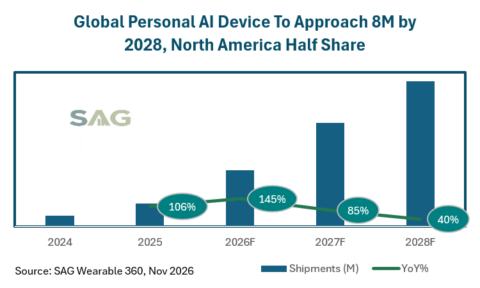
AI recording devices currently dominate the category, supported by products from Plaud, Pocket and other manufacturers. Amazon’s entry with Bee highlights intensifying competition and growing industry interest in personal AI hardware.
However, SAG expects future innovations to extend well beyond recording and transcription, incorporating personalized memory, contextual awareness, proactive assistance and increasingly sophisticated AI-agent capabilities.
The emergence of display-equipped smart rings, AI glasses controllers and standalone cellular-enabled AI companions suggests that the boundaries between traditional wearables and personal AI devices will become increasingly blurred.
Personal AI devices are unlikely to replace smartphones anytime soon. Smartphones will remain the dominant mobile computing platform, supported by their mature application ecosystems, versatile displays, processing capabilities and established connectivity infrastructure.
Nevertheless, AI-powered wearables and personal AI devices could gradually reshape how consumers interact with technology.
Instead of repeatedly unlocking smartphones to check notifications, record conversations, approve AI-agent actions or manage routine tasks, users may increasingly shift selected activities to smaller, more convenient AI-powered devices.
While personal AI devices may not replace smartphones, they could increasingly compete for consumers’ time, attention and everyday interactions.
SAG expects AI to accelerate innovation across smart rings, wearables and personal AI devices, creating new form factors, expanding applications and potentially opening new opportunities across the connected device ecosystem.
The next challenge will be translating these innovations into compelling everyday applications that consumers are willing to adopt.