
For Smart Analytics Global (SAG), the biggest takeaway for day two at Snapdragon Summit 2026 is that wearables are beginning to evolve from smartphone accessories into Personal AI devices.
Key Takeaways
- Wearables are moving toward the Personal AI Device era. Smart glasses, TWS and AI pins are evolving beyond traditional accessories toward AI-first, agent-first devices.
- Qualcomm is building a broad Personal AI ecosystem, spanning audio, wearables, smart glasses and XR, supported by Snapdragon platforms, reference designs, Snapdragon START and industry partnerships.
- AI smart glasses are scaling rapidly, and Display glasses could scale faster than expected.
- Camera-enabled earbuds could bring contextual awareness to TWS, combining audio, vision and AI.
- AI pins are emerging as another Personal AI form factor. The success of AI pins will depend heavily on the AI agent experience and whether they can establish unique use cases and usage scenarios that smartphones, smart glasses, watches and TWS cannot easily replace.
- Enterprise and healthcare represent significant opportunities, while Qualcomm’s Personal AI Health Alliance highlights the potential for AI wearables beyond consumer applications.
- AI agents will be critical. Better hardware alone will not determine the success of Personal AI devices; AI-agent capability, contextual awareness and user experience will increasingly differentiate the market.
Qualcomm Is Building a Broader Personal AI Ecosystem
One of SAG’s strongest observations from Day 2 is the breadth of Qualcomm’s Personal AI strategy.
Rather than treating smart glasses, TWS, watches and other wearables as separate product categories, Qualcomm is building technology platforms that support AI across multiple form factors.
The portfolio spans Snapdragon Sound for audio and hearables, Snapdragon Wear for compact wearable devices, and Snapdragon AR and XR platforms for AI glasses and more advanced spatial computing experiences.
Exhibit 1: Qualcomm Personal AI SoC Product Lineup
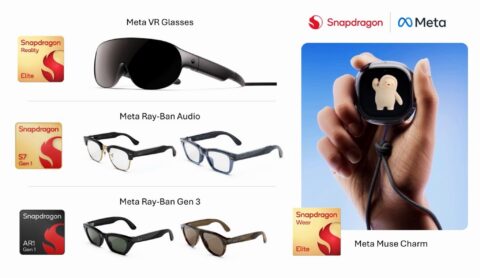
Personal AI devices require collaboration across AI agents, sensors, optics, audio, software, cloud services, industrial design and manufacturing. Qualcomm is increasingly bringing these pieces together through reference designs, software frameworks, Snapdragon START and a growing network of industry partners.
Snapdragon START Could Lower the Entry Barrier
Snapdragon START is an important part of this strategy.
The program combines Snapdragon-powered hardware modules, software and ecosystem partners to make it easier for brands to develop Personal AI devices, initially focusing on smart glasses.
Building AI glasses independently remains difficult. Companies need to integrate compute, cameras, microphones, connectivity, AI, power management, companion applications, cloud services and industrial design into a lightweight form factor.
By providing a more turnkey platform, START could lower the entry barrier, shorten product development cycles and help more companies bring Personal AI devices to market.
INSPECS is one of the important eyewear partners within this ecosystem, highlighting how traditional eyewear companies can increasingly participate in the Personal AI market.
Exhibit 2: INSPECS’s AI Smart Glasses Powered by Qualcomm’s Start Solution
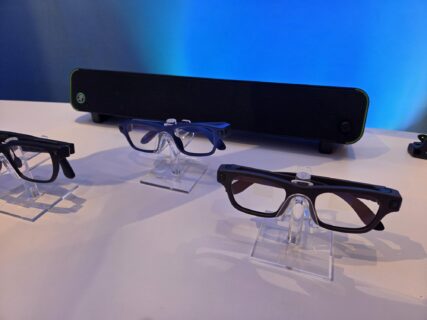
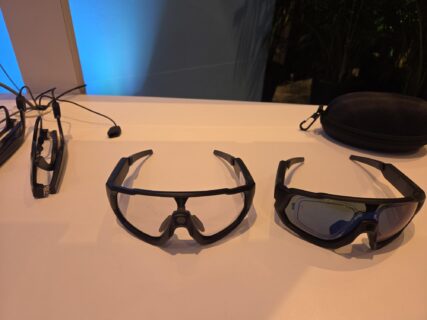
Source: SAG proprietary photo, taken at Snapdragon Summit 2026 in Maui, Hawaii
AI Smart Glasses Continue to Scale Rapidly
AI smart glasses remain one of the fastest-growing Personal AI device categories.
SAG estimates global AI smart glasses to continue the robust growth in 2026 and 2027. Meanwhile, more sub-categories are emerging and serving different user cases. HUD smart glasses remain niche right now, but it could scale faster than expected, thanks to the improvement on weight, battery life, display efficiency, industrial design and cost.
Exhibit 3: Qualcomm SoC Powered AI Smar Glasses in the Show Room
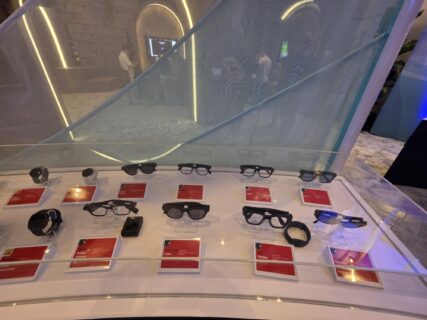
Source: SAG proprietary photo, taken at Snapdragon Summit 2026 in Maui, Hawaii
TWS: From Audio Accessory to Context-Aware Personal AI
TWS represents another important path toward Personal AI.
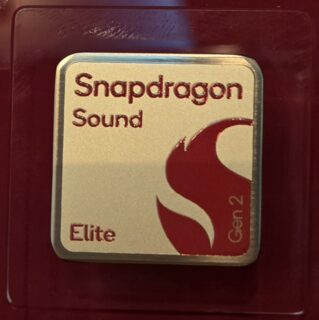
Qualcomm’s newly introduced Snapdragon Sound Elite pushes this category further toward Personal AI by combining on-device AI, connectivity and support for new intelligent audio experiences.
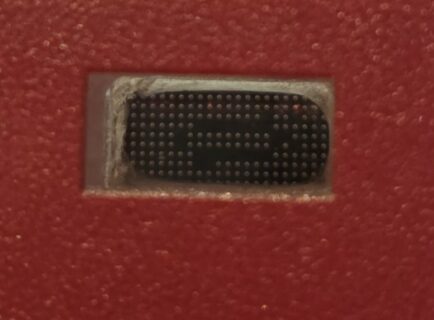
Image 4: Qualcomm Snapdragon Sound Elite SoC
Source: SAG proprietary photo, taken at Snapdragon Summit 2026 in Maui, Hawaii
One particularly interesting direction is camera-enabled TWS.
Cleer demonstrated an intelligent audio wearable concept at the Summit that combines audio, vision and AI. Rather than simply using the camera for photography, vision can give the AI agent additional information about what the user is seeing and the surrounding environment.
AI Pins Add Another Personal AI Form Factor
Qualcomm also demonstrated a new Personal AI pin reference design powered by Snapdragon Wear Elite, including two cameras.
The inclusion of cameras again highlights the growing importance of visual context.
Instead of functioning as a smaller smartphone, an AI pin can potentially give an AI agent immediate access to voice, vision and surrounding context without requiring the user to hold or look at another device.
Meta’s newly introduced Muse Charm, powered by Qualcomm’s wearable technology, is another example of industry experimentation around dedicated Personal AI hardware.
Exhibit 5: Meta’s Muse Charm

For SAG, however, the long-term opportunity for AI pins will depend heavily on the AI agent itself.
If the agent understands users, preferences and context and helps them complete useful tasks throughout the day, dedicated Personal AI hardware can reduce friction and increase engagement. If the AI agent fails to provide compelling value, the case for purchasing an additional device becomes much weaker.
Healthcare and Enterprise Could Be Major Opportunities
Personal AI devices also have significant potential beyond mainstream consumer applications.
Qualcomm’s new Personal AI Health Alliance highlights the opportunity to bring AI wearables into healthcare, where always-available and context-aware devices could support more personalized and proactive experiences.
Healthcare professionals, field workers, technicians and other enterprise users may benefit from hands-free access to contextual information while continuing to interact with the physical environment.
These use cases could provide clearer and more immediate value than some consumer applications.
From Wearables to Personal AI Devices
SAG’s biggest takeaway from Snapdragon Summit 2026 Day 2 is that wearables are entering a fundamentally different phase in the AI era.
Historically, many wearables were primarily extensions of smartphones. Personal AI is beginning to change this relationship.
Emerging wearables can increasingly be designed from the beginning as AI-first and agent-first devices, with AI becoming central to the product experience rather than simply another feature.
Their advantage is not necessarily replacing the smartphone. Instead, wearables can stay closer to the user and provide AI agents with richer context through voice, vision, audio and sensing.
SAG believes AI agents will play a critical role in determining the future of Personal AI devices. Better chips, lighter hardware and longer battery life are necessary, but ultimately consumers and enterprises need useful AI experiences that give them a reason to use these devices every day.
At the same time, privacy, security and geopolitical fragmentation remain important challenges. As Personal AI devices gain access to more visual, audio, health and personal information, consumer trust and data protection will become increasingly important. Different AI and technology ecosystems in China and Western markets could also shape how this industry develops.