
Wearables continued to expand their role within the broader mobile ecosystem at MWC 2026. Smart Analytics Global (SAG) observed strong momentum in AI smart glasses and clip-on TWS earbuds, while the smartwatch segment showed signs of maturity and slower growth. At the technology level, Qualcomm’s newly introduced Snapdragon Wear Elite platform signals an important shift: wearables are gradually evolving from smartphone accessories into more autonomous AI-powered companions.
While the ecosystem is still in early development, SAG believes the combination of on-device AI processing, new wearable form factors, and expanding audio interfaces will define the next phase of wearable innovation.
AI Smart Glasses: Fastest-Growing Wearable Category
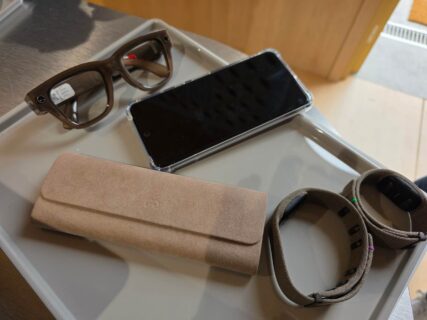
AI smart glasses were among the most dynamic categories observed at MWC. According to SAG estimates, global AI smart glasses shipments nearly quadrupled to around 7 million units in 2025, largely driven by the success of Meta’s smart glasses ecosystem developed in partnership with EssilorLuxottica.
A key example is the Ray‑Ban Meta Smart Glasses lineup, which combines established eyewear design with AI-enabled camera, audio, and optional display features. The recently introduced display-equipped version demonstrates more advanced user interaction capabilities, although the technology still carries relatively high cost.
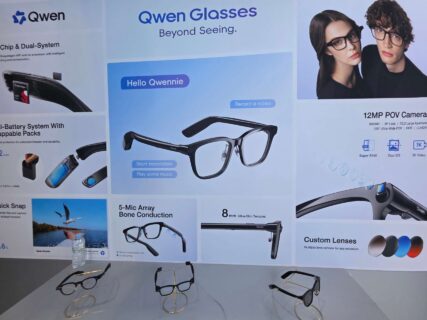
In contrast, several Chinese vendors are exploring lower-cost approaches. SAG tested the AI smart glasses launched by Aili Qwen at MWC, which utilize green micro-LED display technology. This display solution offers significantly lower component cost and is quickly becoming the preferred option among many Chinese manufacturers. However, the current user experience remains relatively basic compared with Meta’s solution.
More importantly, Chinese vendors still face a big challenge: distribution. Unlike Meta, which benefits from EssilorLuxottica’s global retail network of optical stores, as well as BestBuy and mobile operators nationwide in the USA, most Chinese brands lack partnerships with traditional eyewear retailers. Since smart glasses require physical trial before purchase, limited retail presence often results in higher return rates and slower consumer adoption.
From a technology perspective, navigation remains one of the most promising use cases, though current implementations remain limited.
Looking forward, SAG expects AI smart glasses with optional display technology to surpass audio-only smart glasses by 2028, driven by improving technology maturity and declining component costs.

Clip-On TWS: A New Fast-Growing Sub-Segment
True wireless stereo (TWS) earbuds remain one of the largest wearable categories. SAG estimates the global TWS market reached approximately 320 million units in 2025, representing modest 3% year-over-year growth. Within TWS, SAG tracked the clip-on earbuds has been rising quickly.
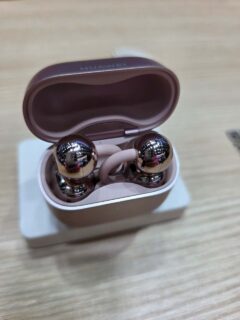
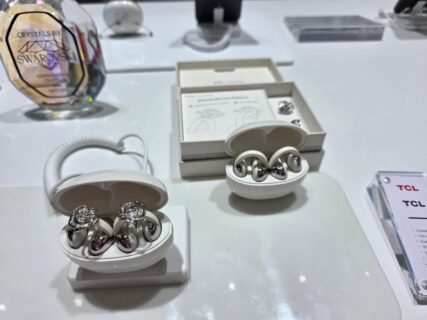
First introduced by Huawei in 2023, the clip-on format has rapidly attracted attention across the industry. Several vendors, including Bose, Sony, OPPO, and TCL, are now entering the segment.
At MWC 2026, both Huawei and TCL-Alcatel demonstrated their latest clip-on designs. TCL’s Crystal Clip concept highlights an emerging trend: TWS products are increasingly positioned not only as audio devices but also as fashion accessories. The ear-clip design is particularly appealing to female consumers and users who prefer open-ear listening without inserting earbuds into the ear canal.
Smartwatches: Market Leader but Growth Slowing
Smartwatches remain the largest wearable product category globally, but the segment appears to be entering a more mature phase.
Several smartwatch models were introduced or highlighted at MWC, including:
- Xiaomi Watch 5 — a major release transitioning from Xiaomi’s HyperOS to Google’s Wear OS ecosystem, featuring a 1.54-inch AMOLED display and gesture-based control via muscle-signal sensors.
- Tecno Watch GT 1S — positioned within Tecno’s AIoT ecosystem, offering up to 15 days of battery life and AI-generated watch faces.
- Huawei Watch GT Runner 2 — a professional running watch designed for athletes, featuring a lightweight 34.5g body and an advanced 3D floating antenna for precise GPS tracking.
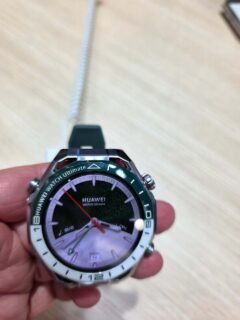
- Huawei Watch Ultimate 2 — an ultra-premium outdoor smartwatch designed for exploration and sports performance.
Despite continued innovation in sports and health features, SAG expects the global smartwatch market to gradually trend downward in the coming years as the category approaches saturation in many mature markets.
Qualcomm Snapdragon Wear Elite: Enabling the Next Generation of AI Wearables
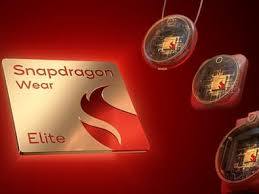
At Mobile World Congress 2026, Qualcomm introduced the new Snapdragon Wear Elite platform, marking a meaningful step forward in wearable computing. Built on a 3nm process, the chipset integrates a dedicated Hexagon NPU capable of running AI models with up to 2 billion parameters locally. This enables features such as real-time translation, transcription, and AI-driven health coaching directly on the device, improving privacy, reducing latency, and enhancing overall user experience. Qualcomm also claims major performance gains, including up to 5× faster CPU performance, 7× faster GPU rendering, and 30% longer battery life.
Beyond smartwatches, Qualcomm is positioning the platform to support a wider range of wearable devices—including smart glasses, AI pins, pendants, and other screenless form factors—highlighting the industry’s gradual shift toward more autonomous wearables with stronger on-device AI capabilities. Early ecosystem support is already emerging, with Samsung Electronics confirming the chipset will power its next-generation smartwatch platform.
SAG Outlook: The Rise of AI-Driven Wearables
SAG believes the wearable industry is entering a new transition phase.
Over the next several years, wearables will gradually evolve from passive smartphone companions into more autonomous AI devices. Advances in on-device AI processing, combined with improved connectivity technologies such as Bluetooth 6.0 and satellite messaging, will enable wearables to operate more independently while still complementing the smartphone ecosystem.
In this emerging landscape, three core wearable categories will remain dominant: AI smart glasses, TWS earbuds and smart watches.
Among them, AI smart glasses and open-ear audio devices are likely to drive the next wave of innovation, while smartwatch growth stabilizes.
The long-term vision is an interconnected “wrist-plus” wearable ecosystem, where devices such as smartwatches, earbuds, and AI glasses work together as a seamless interface for personal AI assistants.