
Mobile World Congress 2026 points to a clear industry direction: flagship differentiation is increasingly centered on camera hardware, premium branding partnerships, and selective form-factor innovation. While AI features continue to gain visibility, hardware specs, particularly imaging remains the most decisive purchase driver in the high-end smartphone segment.
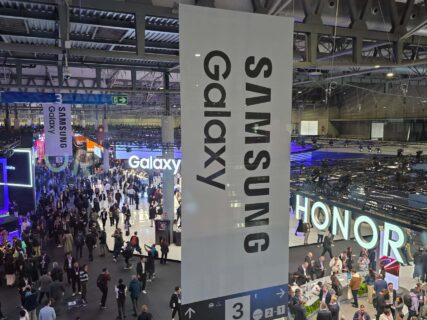
Below are Smart Analytics Global’s (SAG) key smartphone takeaways from the show floor in day one.
Xiaomi: Doubling Down on Leica-Powered Premium
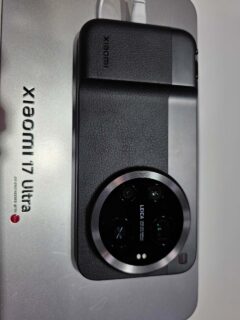
Xiaomi used the global stage ahead of MWC to introduce the Xiaomi 17 and 17 Ultra internationally, alongside the Leica Leitz Phone powered by Xiaomi. Across the portfolio, imaging remains the unifying theme. The Xiaomi 17 targets the compact flagship segment with a Leica-tuned triple 50MP rear system and strong battery positioning, while the 17 Ultra pushes further into ultra-premium territory with its 50MP LOFIC main sensor and 200MP mechanically adjustable telephoto.
The Leica Leitz Phone serves a more aspirational role, emphasizing luxury design language and camera-centric minimalism rather than volume scale. From SAG’s perspective, Xiaomi’s continued deep collaboration with Leica is central to its premium ambitions globally. With Western Europe pricing starting around €999 and extending into the ultra-premium band, Xiaomi is clearly prioritizing brand elevation. SAG believes the sustained overseas success will depend increasingly on channel execution and brand equity, not imaging alone.
vivo: Zeiss Partnership Anchors Ultra-Premium Push
vivo’s X300 Ultra further echoed the industry’s camera-first trajectory. The device centers on a large-format main sensor supported by advanced periscope zoom and ultrawide modules, complemented by upgraded computational photography and low-light tuning. The hardware package aims to deliver more consistent flagship performance across diverse shooting scenarios.
Equally important is vivo’s deepened co-engineering work with Zeiss. Beyond branding, the partnership spans optical design, coating optimization, and color science calibration, all intended to strengthen the device’s professional imaging credentials.
SAG views this as a deliberate move to solidify vivo’s standing in the ultra-premium tier, mirroring Xiaomi–Leica and other optics-driven strategies across the Android ecosystem.
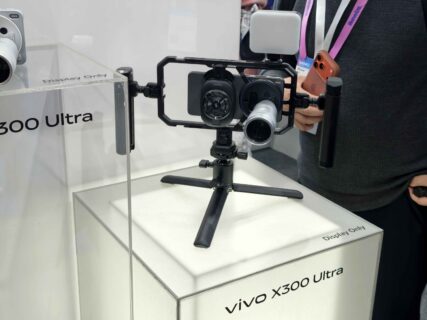 Photo by tabletowo.pl
Honor: Foldable Engineering Progress with Long-Term Bets
Honor’s Magic V6 continues to push the foldable envelope, with slimness and battery capacity emerging as its most tangible hardware strengths. The device signals steady engineering progress as Honor seeks to strengthen its premium foldable positioning against entrenched competitors.
At the same time, Honor showcased its Robot Phone concept under the broader Alpha strategy. While commercially planned for China in 2H 2026, SAG views the product primarily as a forward-looking innovation signal rather than a near-term volume driver. The initiative highlights Honor’s ambition to explore AI-native device form factors beyond traditional smartphones.
Motorola: Premium Re-Entry Through Foldables
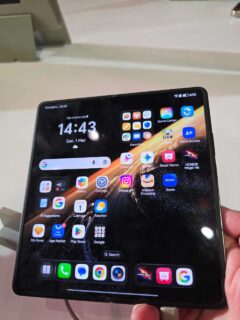
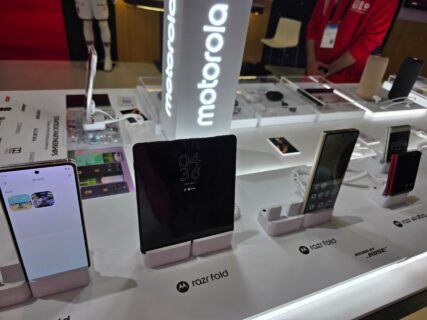
Motorola’s latest foldable launch underscores its continued effort to rebuild relevance in the high-end Android segment. Leveraging its heritage in foldable design and strong carrier relationships — particularly in North America — the brand is positioning the Motorola Fold firmly in the ultra-premium tier.
European pricing around €1,999 confirms a premium-first strategy, although broader regional pricing visibility remains unavailable.
From SAG’s perspective, Motorola is currently prioritizing brand positioning over aggressive volume expansion, and execution through operator channels will be critical to determining whether the foldable push can scale meaningfully.
Transsion: Testing the Upper Tier While Protecting Core
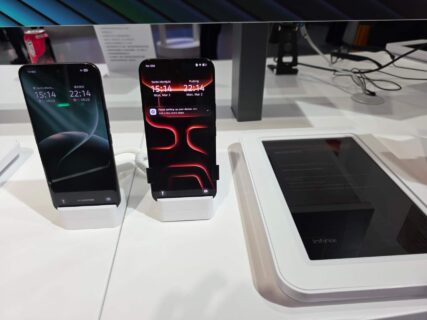
Transsion introduced the Infinix Note 60 Ultra and Tecno Camon 50 Ultra 5G while also demonstrating an experimental modular-style concept device. The showcase signals the company’s interest in gradually elevating its technology image and exploring higher-end territory.
However, SAG expects Transsion’s near-term growth engine to remain firmly rooted in mass-market emerging regions. The experimental device echoes earlier modular attempts in the industry and should be viewed primarily as a brand and innovation signal rather than an imminent commercial pivot.
ZTE / Nubia: Gaming Segment Continues to Outperform
ZTE demonstrated the Doubao Phone M153 with multiple AI-assisted lifestyle scenarios, though key transactional steps still require human confirmation, reflecting the industry’s cautious transition toward agentic experiences.
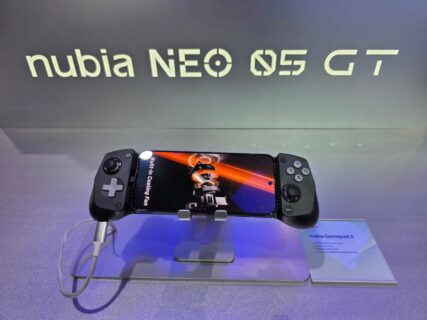
More notably, the RedMagic gaming lineup continues to highlight the resilience of the gaming phone niche. Despite Nubia holding roughly 3% global share of global gaming phone market share in 2025 per SAG, the gaming segment grew approximately 40% YoY in 2025 and is expected to continue outpacing the broader market in 2026. This stands in sharp contrast to SAG’s forecast of a 7% YoY decline for the overall smartphone market.
SAG Summary
MWC 2026 confirmed that the flagship smartphone battleground remains firmly anchored in imaging hardware and premium brand partnerships. While AI is becoming more visible in marketing narratives, camera performance, optics credibility, and form-factor engineering continue to carry the greatest weight in high-end consumer decision-making.