
Rumors are growing that OpenAI may launch its first consumer AI hardware device in 2H 2026, with market speculation increasingly pointing toward an audio-focused wearable—potentially earbuds designed for always-on, voice-first AI interaction. While the product details remain unconfirmed, the strategic direction makes sense. In the AI era, the next battlefield is not only model performance, but also who owns the consumer entry point—the daily interface layer where users interact with AI most frequently.
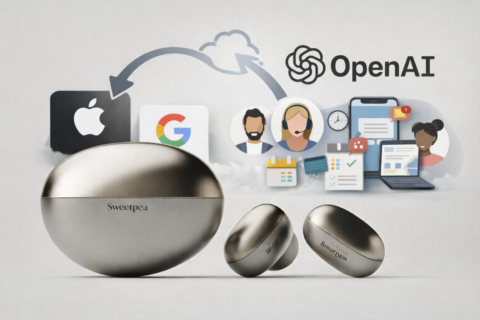
A strategic shortcut: bypassing Apple and Google
If OpenAI enters the wearable market through earbuds, it could be a practical move to bypass Apple and Google’s ecosystem control and establish a direct consumer touchpoint. Today, most AI interactions still flow through PCs and smartphones / operating systems controlled by Microsoft, Apple and Google. An OpenAI-branded wearable would create a new “always-on” contact layer that allows OpenAI to reach consumers more directly, build stronger user habits, and potentially reduce long-term dependency on platform gatekeepers.
This approach also reflects a broader industry trend: the shift from “apps” toward AI agents. Instead of opening multiple apps to complete tasks, users increasingly want AI to understand intent, provide context-aware support, and execute actions across services. An audio-first wearable is a natural step in that direction—especially for quick, lightweight workflows.
Why earbuds make sense: AI is still a productivity-first story
At this stage, the strongest consumer AI demand remains skewed toward work and productivity use cases. These include meeting summaries, messaging support, translation, scheduling, task reminders, and hands-free assistance. In this context, earbuds are one of the most realistic form factors for scaling early adoption because they are familiar, socially accepted, and already integrated into daily routines.
Importantly, OpenAI earbuds are more likely to act as a companion device rather than a smartphone replacement. Smartphones will remain the trusted control hub for identity, payments, permissions, and confirmation. PCs and notebooks will remain the primary productivity tools for content creation and deep workflows. Earbuds, however, could become the always-on “front end” that captures voice, context, and intent, enabling faster and more seamless AI interaction throughout the day.
Shipment potential: 10M+ is achievable, but context matters
If OpenAI executes well on pricing, distribution, and launch markets, shipment potential could exceed 10 million units within the first 12 months. That said, even 10M+ units would still represent a small share of the global TWS market and would trail far behind Apple’s AirPods scale in absolute volume.
However, for a first-generation AI hardware product, 10M+ would still be a meaningful milestone. It would validate real consumer demand for AI companion devices and strengthen OpenAI’s position as a direct-to-consumer platform, rather than remaining purely a software layer inside other ecosystems.
Why AI smart glasses remain the stronger long-term growth category
While audio-first wearables may scale quickly, Smart Analytics Global (SAG) believes AI smart glasses are better positioned to deliver the fastest growth rate among companion devices over the next several years. The reason is simple: glasses introduce a new sensing layer—vision—and, with HUD/display evolution, can support a much broader set of AI use cases beyond voice alone.
SAG expects AI smart glasses to become the most disruptive wearable category as the market matures, and over time, they may start taking share from the low-to-mid-tier TWS earbuds segment, particularly as consumers prioritize contextual AI experiences over basic audio consumption.
Final takeaway: the entry point war has begun
OpenAI’s rumored 2026 hardware move—if it materializes—signals a major shift in the AI era: the competition is expanding from AI models into devices, interfaces, and consumer entry points. Earbuds could be a smart and scalable starting point, especially for productivity-driven AI use cases, but the longer-term platform opportunity may ultimately favor vision-enabled devices such as smart glasses.
📌 This blog ties closely to SAG’s newly published Mobile 2026+ Top 5 Mega Trends Outlook report, where we examine how AI agents, emerging device categories, and ecosystem control will reshape the mobile industry value chain from 2026 onward.