
Meta launched a range of new hardware at Connect 2026, including Ray-Ban Meta Audio AI smart glasses, Muse Charm and the new Meta VR Glasses. Smart Analytics Global (SAG) believes all these points to the direction: Meta is pushing beyond smartphones and fighting for the next hardware interface for Personal AI.
Key Takeaways
- Meta is expanding its Personal AI hardware portfolio. New products including camera-free AI glasses and Muse Charm show Meta’s ambition to build more direct ways for consumers to access its AI agent beyond smartphones.
- Camera-free AI glasses are responding privacy concern, but privacy concerns will not disappear. SAG believes technology development, industry standards and regulatory initiatives will all be needed.
- AI smart glasses remain a key growth area. SAG expects strong growth in 2026 and 2027, although YoY growth should slow down from the triple-digit rates seen from Q3 2025 through Q2 2026 to double-digit growth as the market gets bigger.
- Muse Charm is Meta’s bet on a new Personal AI hardware interface. Its success will depend heavily on whether Muse itself can prove useful enough to consumers.
- Meta VR Glasses make a big step forward in weight, but the use cases remain relatively niche. Productivity and content viewing could benefit from the lighter design, while price and social barriers could limit broader consumer adoption.
Camera-Free AI Glasses: Good for Privacy, but Not Enough
Meta introduced Ray-Ban Meta Audio, the audio glasses without cameras. The new model is also Meta’s lightest and slimmest AI glasses to date.
Exhibit 1: Meta Ray-Ban Audio AI Smart Glasses

SAG believes removing the camera and offering a simpler product is a good move. It can address consumers who like the idea of smart glasses but remain uncomfortable with a camera pointing at people around them.
However, camera-free glasses alone will not solve the broader privacy issue. As smart glasses become more capable, the industry needs better technology solutions, clearer industry standards and appropriate regulation. These efforts need to move together to build consumer trust.
SAG remains positive about the category. SAG expects strong and solid growth for AI smart glasses in both 2026 and 2027. However, after triple-digit YoY growth from Q3 2025 through Q2 2026, growth is expected to slow to a double-digit rate as the market reaches a larger base.
SAG also believes there is no single smart-glasses design that can address every consumer need. Audio-only glasses, camera-enabled AI glasses, display glasses and more advanced AR glasses can coexist, serving different use cases, price points and consumers.
Muse Charm: Meta Is Fighting for the Personal AI Hardware Interface
Muse Charm is perhaps the most interesting new device from Meta Connect. Meta describes it as a pocket-size device designed specifically for users to talk and interact with Muse.
Exhibit 2: Meta Muse Charm

SAG views Charm as Meta’s attempt to bypass the smartphone for some AI interactions and build a direct hardware interface between consumers and its Muse agent.
The small and fashion-focused form factor could attract Gen Z, fashion-conscious consumers and tech-savvy early adopters. But whether it can reach the broader mass market remains to be seen.
The bigger question is not Charm itself—it is Muse, the AI agent.
If Muse becomes popular and proves its value in consumers’ everyday lives, Charm could benefit and gain momentum. If consumers do not see enough value in the agent, it will be difficult for a dedicated device such as Charm to become a game changer.
Still, SAG expects to see more AI pins, charms and similar devices as major AI players explore new ways to bring their agents directly to consumers.
Meta VR Glasses: Much Lighter, but Use Cases Remain Niche
Meta’s new VR Glasses represent an encouraging step forward in hardware. The device weighs around 100 grams, about five times lighter than Quest 3, with much of the compute, battery and storage moved to a separate puck. It will launch in Spring 2027 for $1,299.99.
Exhibit 3: Meta VR Glasses
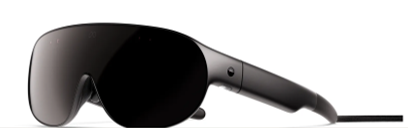
SAG believes the use cases will be somewhat different from the traditional Quest family. Rather than mainly focusing on VR gaming, Meta is highlighting content viewing, immersive sports and productivity, including using a private virtual workspace or watching a movie during a long flight.
The lighter form factor is encouraging, but SAG believes these use cases remain relatively niche. Wearing immersive glasses in public still has social barriers, while the higher price is another challenge.
For these reasons, SAG does not expect the lighter design alone to drive a quick takeoff or major volume ramp-up for VR glasses and headset market.