
Key Takeaways
- SAG expects price increases for the iPhone 18 Pro and Pro Max to be largely unavoidable, driven by rising AI-related hardware costs, higher memory content and continued premiumization.
- Apple is unlikely to implement a uniform / blanket price increase across the iPhone portfolio. Instead, SAG expects a more strategics and practical pricing strategy, with selective adjustments on iPhone N generation premium models while maintaining competitive pricing for legacy iPhone models to protect shipment volume.
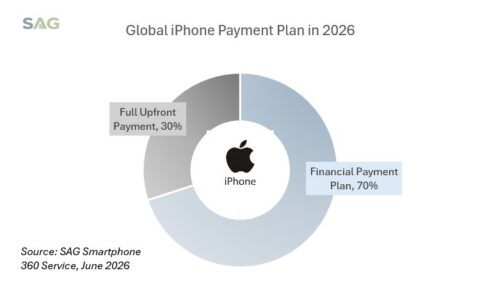
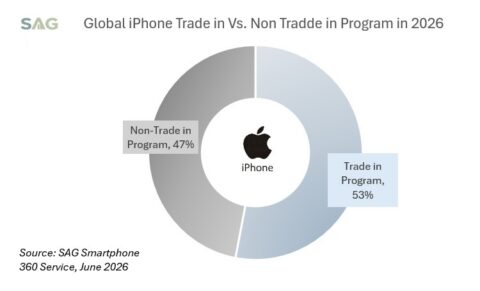
- The wide availability and increasing adoption of financial payment, especially the month installment plans and trade-in programs for brand new iPhone buyers will significantly cushion the impact of higher prices. SAG forecasts that 70% of global brand-new iPhone purchases in 2026 will be made through monthly financing, and 53% of brand-new iPhone buyers will use trade-in programs, reducing the affordability impact of moderate price increases.
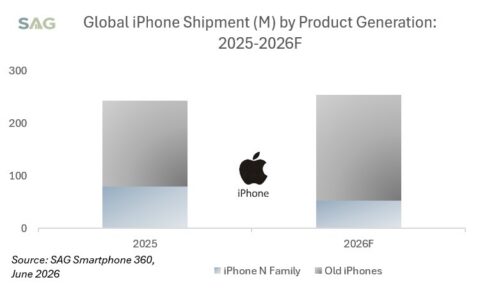
- SAG expects the iPhone 18 Pro family to ship below the exceptionally strong iPhone 17 Pro cycle. However, continued demand for the iPhone 17 family and other legacy models should offset much of the difference, supporting overall shipment stability.
- SAG maintains its forecast of more than 250 million global iPhone shipments in 2026. Our base-case scenario assumes Apple will maintain the launch pricing of the iPhone 17 lineup, while selectively increasing prices for the higher-end iPhone 18 Pro and Pro Max models in September 2026.
- SAG has noticed short-term retail price volatility for the iPhone 17 series in Japan and parts of Europe in recent days. We believe these changes are largely attributable to foreign exchange fluctuations and inventory adjustments by third-party retailers, rather than Apple’s official pricing policy. Therefore, these retail price movements do not alter SAG’s base-case expectation that Apple will maintain the launch pricing of the iPhone 17 lineup.
Following Apple’s recent price increases for selected Mac and iPad models, Smart Analytics Global (SAG) expects price increases for the upcoming iPhone 18 Pro and iPhone 18 Pro Max to be largely unavoidable. Rising DRAM capacity, AI computing requirements, camera upgrades and manufacturing costs will continue to pressure Apple’s hardware margins.
However, SAG does not expect Apple to adopt a blanket price increase across the entire iPhone portfolio. Instead, we believe Apple will implement a more strategic / practical pricing strategy that selectively increases pricing on premium models while balancing profitability with shipment growth.
SAG expects Apple to retain its existing memory strategy for the iPhone 18 Pro family rather than making significant changes to configurations. Instead of implementing broad price increases across every memory variant, we believe Apple is more likely to adopt a more differentiated storage-tier pricing strategy, with pricing adjustments primarily focused on higher-memory variants while keeping entry-level Pro models broadly competitive. This approach should improve product mix and profitability while limiting the impact on overall demand.
For Apple’s first foldable iPhone, SAG continues to expect the device to be positioned firmly in the ultra-premium segment, reflecting its first-generation technology, premium materials and limited initial production. Meanwhile, we expect legacy iPhone models, particularly the iPhone 17 family, to maintain relatively stable pricing throughout 2026, allowing Apple to preserve shipment volume while expanding ASP through its newest premium products.
SAG has noticed short-term retail price volatility for the iPhone 17 series in Japan and parts of Europe in recent days. We believe these changes are largely attributable to foreign exchange fluctuations and inventory adjustments by third-party retailers, rather than Apple’s official pricing policy. Therefore, these retail price movements do not alter SAG’s base-case expectation that Apple will maintain the launch pricing of the iPhone 17 lineup.
Having all above assumptions said, SAG maintains its forecast of more than 250 million global iPhone shipments in 2026. We believe today’s premium smartphone market is increasingly driven by affordability rather than retail price alone.
Exhibit 1: SAG Global iPhone Shipment by Product Generation: 2025-2026F
iPhone Financial Payment Plans Reduce the Impact of Higher Prices
According to SAG Smartphone 360 Service, roughly 70% of global legitimate brand-new iPhone purchases in 2026 will be made through financial payment plans, up from 68% in 2025. Only 30% of brand-new iPhone buyers are expected to pay the full retail price upfront worldwide this year.
SAG defines financial payment plans as legitimate brand-new smartphones purchased through monthly installment plans or other financing arrangements, with or without subsidies.
The adoption of financial payment plans, especially monthly payment plan has accelerated steadily over recent years, not only in mature operator-led markets such as North America, Western Europe, Japan and South Korea, but also increasingly across open-channel dominated emerging markets, where retailers, financial institutions, e-commerce platforms and Buy Now, Pay Later (BNPL) providers are making premium smartphones more affordable.
As financing options become more widely available globally, consumers are increasingly evaluating smartphones based on their monthly payment rather than the full retail price, significantly reducing the impact of moderate price increases on purchasing decisions.
Exhibit 2: Global Legitimate Brand-New iPhone Payment Plan in 2026F
Even if Apple moderately raises prices for the iPhone 18 Pro family, the increase will typically translate into only US$4-8 per month under standard 24- or 36-month financing plans, making the impact relatively modest for most premium buyers.
Trade-In Programs Continue to Cushion Higher Selling Prices
Trade-in programs have become another important structural driver supporting premium smartphone demand, significantly reducing the impact of higher retail prices on consumer purchasing decisions.
According to SAG Smartphone 360 Service, 53% of global legitimate brand-new iPhone purchases in 2026 are expected to involve a professional trade-in program, up from 50% in 2025, considerably higher than the overall smartphone market which sits at below 40%. The premium positioning of iPhones, together with their relatively high residual values, continues to make trade-in an increasingly attractive upgrade option for consumers.
SAG defines professional trade-in program as consumers who trade in their existing smartphones through an OEM, mobile operator, retailer, or certified professional buyback partner and receive an immediate credit toward the purchase of a new smartphone.
Exhibit 3: Global Legitimate Brand-New iPhone Sales Trade in Program Adoption Rate in 2026
The rapid growth of trade-in programs is being driven not only by mobile operators, but also by Apple, other smartphone vendors, major retailers, e-commerce platforms and specialized recommerce providers. As trade-in programs become more widely available across both online and offline channels, consumers have more convenient and transparent ways to monetize the value of their existing smartphones when upgrading.
At the same time, consumer awareness of smartphone residual value continues to increase. More users now recognize that trading in an existing device can significantly reduce the effective cost of a new purchase while also supporting sustainability through device reuse and recycling. These factors have accelerated trade-in adoption across both developed and emerging markets.
SAG estimates that professional trade-in program penetration has already exceeded 50% in most mature smartphone markets, while adoption in emerging markets has also improved rapidly, approaching 20% as financing options, retail infrastructure and certified recommerce ecosystems continue to develop.
Should Apple moderately increase pricing for the iPhone 18 Pro family, SAG expects the company, together with its operator and retail partners, to continue offering competitive trade-in values to preserve upgrade momentum.
As a result, consumers are increasingly evaluating the net upgrade cost after trade-in, rather than the official retail price, substantially reducing the impact of moderate price increases on overall iPhone demand.
Legacy iPhones Will Continue Supporting Overall Shipments
SAG expects the iPhone 18 Pro and Pro Max will underperform predecessor iPhone 17 series, to ship below iPhone 17 Pro generation, which enjoys the super cycle across cycle across multiple major markets, especially in both USA and China.
However, this should not be interpreted as weaker overall iPhone demand.
Instead, legacy iPhone models, particularly the iPhone 17 family, are expected to fill much of the volume gap. With no new mainstream iPhone 18 basic model replacing the iPhone 17 during 2026, the basic iPhone 17 model should remain one of Apple’s key shipment drivers across many markets during the upcoming holiday season in 2026.
At the same time, Apple’s first foldable iPhone is expected to remain a niche ultra-premium product during its first generation, focusing primarily on profitability, product mix optimization and brand leadership rather than shipment scale.
SAG Maintained 250M+ iPhone Shipment Target in 2026
Rather than relying on across-the-board blanket price increases, SAG expects Apple is to selectively optimize pricing across its premium portfolio while maintaining competitive pricing on legacy iPhone models to protect volume.
Combined with the widespread adoption of financial payment plans (70% of purchases) and trade-in programs (53% of purchases), we believe the affordability impact of moderate price increases will remain modest.
Accordingly, SAG maintains its forecast of more than 250 million global legitimate brand new iPhone shipments in 2026. While the iPhone 18 Pro family is expected to normalize after the super cycle of iPhone 17 Pro cycle, continued demand for the iPhone 17 family and other legacy iPhone models should offset much of the difference, enabling Apple to improve ASP and profitability while maintaining stable shipment performance.
Linda Sui, Founder & Principal Analyst, Smart Analytics Global (SAG), comment: “We believe higher pricing for the iPhone 18 Pro family is largely unavoidable given rising hardware costs and Apple’s continued premiumization strategy. However, Apple is unlikely to rely on broad-based blanket price increases. Instead, we expect a more sophisticated pricing approach that improves product mix while preserving affordability through monthly financing, trade-in programs and competitive legacy models. As a result, we expect only a modest impact on demand and therefore maintain our forecast of more than 250 million global iPhone shipments in 2026.”
Clients, please click here is access SAG global iPhone shipment by model by quarter forecast report through Q4 2027.