
Key Takeaway:
- Variable aperture stands out: The f/4.0 setting creates distinctive flower-like starburst effects at night, adding creative flexibility to photography.
- Strong camera performance: Long-distance shots retain good detail, while moving subjects and close-ups deliver solid results.
- Performance and cooling improve: The A20 Pro delivers strong performance, while improved thermal management and faster charging strengthen the overall experience.
- Video remains a strength: Cinematic mode delivers smooth background blur and natural-looking focus transitions, other video modes are good as well. In our opinion, Apple is the most reliable smartphone vendor for video recording and go to preference for many vloggers.
- Software needs refinement: Camera Control sensitivity, native photo editing options, occasional software behaviour, and AI capabilities leave room for improvement.
- Upgrade decisions may vary: The iPhone 18 Pro Max could appeal to users with older Pro models, while iPhone 17 Pro owners may find fewer reasons to upgrade. Rising memory costs and price sensitivity could also influence demand.
The Smart Analytics Global (SAG) research team has been testing Apple’s iPhone 18 Pro Max, evaluating its camera, hardware, software, battery life, AI capabilities. Our overall impression is positive. The iPhone 18 Pro Max delivers meaningful improvements in photography, performance, thermal management, and charging. Some software and user-experience details could still be refined.
A20 Pro: A Flagship Processor That Delivers
Processing performance looks like one of the iPhone 18 Pro Max’s key strengths. Powered by Apple’s A20 Pro chipset, built on TSMC’s 2nm process technology, the device delivered strong performance across everyday. We would call A20 Pro as chipset of the year.
Familiar Design, Better Cooling, but Added Weight
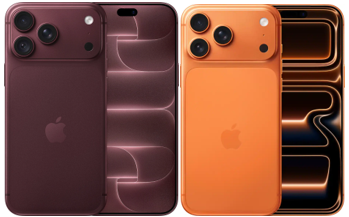
The iPhone 18 Pro Max retains a design language similar to its predecessor, with a cleaner, single-tone appearance. Burgundy stands out alongside Glacier Blue, Black, and Silver. The large rear camera island remains distinctive.
The phone is heavier than its predecessor, potentially reflecting new camera hardware and a larger vapor chamber. SAG’s testing found relatively limited heating during everyday use, with noticeable warmth mainly when charging and using the device simultaneously.
Image 1: iPhone 18 Pro Max (Burgundy) vs. iPhone 17 Pro Max (Orange)
Early UX Observations: Excellent Audio, and a Sensitive Camera Button
Our researcher initially experienced inconsistent Face ID recognition, but a software update resolved the issue. The built-in speakers sound very good to us, with clarity, volume, and balance.
The Camera Control button can feel sensitive during everyday use and is easy to press accidentally. Users can disable it or customize its activation behavior.
There is no native photo collage feature in Apple’s Photos app, so users have to rely on third-party applications or Apple’s Shortcuts app. Given how frequently consumers share photo collections on social media, SAG sees a case for adding collage creation and more flexible editing tools directly into Photos.
Variable Aperture: A Camera Upgrade Worth Noting
The camera system looks like one of the more meaningful upgrades over the iPhone 17 Pro Max. The headline improvement is the introduction of physical variable aperture, which gives users greater flexibility.
During our testing, the f/4.0 setting produced attractive starburst effects around point light sources at night. SAG also observed improvements in overall image quality compared with the iPhone 17 Pro Max.
Image 2: Variable Aperture in Action: Creating Stunning Starburst Effects at f/4.0

Long-Distance Photography, Moving Subjects, and Close-Ups
Long-distance image quality is another area where the phone performed well. At San Francisco’s Twin Peaks, the camera captured detailed skyline views across multiple zoom levels.
Image 3: San Francisco Skyline: Putting Long-Range Zoom to the Test

Testing of India’s Taj Mahal also showed its ability to capture architectural details. SAG’s takeaway: the phone combines useful zoom flexibility with good detail retention under favorable lighting conditions.
Image 4: Taj Mahal: From the Full Picture to Intricate Architectural Details

We tested moving subjects, animals, flowers, indoor objects, and food. Cyclists remained relatively sharp, suggesting effective autofocus and image processing. Animal photography showed good detail and natural background separation.
Image 5: Horse Photography: Color, Contrast, and Detail Under Different Settings

On the other hand, Samsung offers a broader range of ready-to-use shooting and editing options, including Beauty mode, Food mode, collage creation, and additional editing controls. iPhone users may need to spend more time adjusting photos or switching applications. Apple’s Spatial Scenes and Clean Up features worked reasonably well, though neither changed our overall view of the camera software.
Night Photography: Brighter Than Reality, with f/4.0 as the Highlight
Night photography revealed strengths and trade-offs. The phone can produce bright low-light photographs, though users need to hold it steady for a second or longer, depending on ambient lighting. Some results looked brighter than the actual environment, which can help in very dark surroundings but may not suit those seeking a natural look.
In side-by-side auto-mode samples, the iPhone 17 Pro Max tended to produce brighter nighttime images than the actual scene, while the iPhone 18 Pro Max delivered more restrained exposure.
Image 6: Indoor Night Mode Test: iPhone 17 Pro Max vs. iPhone 18 Pro Max
Video recording remains one of Apple’s competitive strengths. SAG found Cinematic mode to work well, with smooth background blur and natural-looking focus transitions.
Battery, and Charging
Battery performance has been satisfactory in everyday use, although this was not a controlled benchmark. Consumption rises during demanding activities, particularly extended video recording and editing. Faster charging is another meaningful improvement.
Software and AI: Smooth, with Room to Grow
The iPhone 18 Pro Max generally delivers a smooth and responsive software experience. We found Apple’s Liquid Glass interface visually appealing, with fluid navigation and strong integration across applications.
The testing period surfaced a few items worth noting: an unexpected reboot before a software update. After update, it got resolved but one day we observed charging beyond a configured battery limit of 85%, and same day there was a repeated notifications to type on iPhone to get it typed on Apple Watch, which was a little sad. SAG also sees room for an optional way to close multiple open applications at once.
Apple’s built-in AI experience has not yet become central to our daily usage. Siri remains useful for reminders, alarms, and straightforward voice commands, but for complex questions, research, and content creation, we tended to turn to platforms such as ChatGPT and Google Gemini.
Ecosystem Strength and SAG’s Key Takeaway
The iPhone 18 Pro Max may initially appear incremental, but SAG believes several improvements are more meaningful than they appear on a specification sheet. Variable aperture offers new photographic flexibility, particularly at night, while the A20 Pro chipset, larger vapor chamber, faster charging, and refined camera processing contribute to a stronger flagship experience.
Areas to refine include Camera Control sensitivity, native photo editing, occasional software behavior, added weight.
For users with older Pro models, the iPhone 18 Pro Max may be a compelling upgrade. For iPhone 17 Pro and Pro Max owners, it is less essential unless variable-aperture photography or faster charging are priorities.
We are cautious of the commercial outlook for Apple’s iPhone 18 Pro (full details in the report). Premium iPhone buyers are weighing new features against price and upgrade value. Consumers remain willing to purchase premium iPhones, but are becoming more selective especially in the scenario of memory price hike.
Note: The review unit was provided by Apple but the opinion is of SAG and this is not a sponsored post.