
Key Takeaways
- Samsung newly launched Fold 8 represents and validates the industry’s transition toward the Wide Fold form factor and a new generation of content-native foldable smartphones.
- Huawei pioneered the Wide Flip and Wide Fold categories with the Pura X and Pura X Max. Samsung’s adoption significantly strengthens the likelihood that wider foldable form factors will become the global industry standard.
- The Wide Fold better aligns with everyday consumer behavior by combining smartphone-like usability on the cover display with an immersive large-screen experience for video streaming, gaming, social media and AI-powered applications.
- SAG forecasts the global foldable smartphone market will return to strong growth, with shipments increasing by more than 30% YoY in both 2026 and 2027, driven by improving hardware maturity, wider vendor participation and Apple’s anticipated market entry.
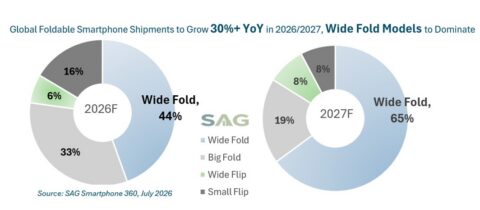
- Within this broader market expansion, SAG forecasts the Wide Fold (aspect ratio of 4:3) will become the dominant foldable form factor, accounting for approximately 44% of global foldable smartphone shipments in 2026 and around 65% in 2027 as the industry shifts toward content-native designs.
Samsung today unveiled its latest foldable smartphone portfolio, including the Galaxy Fold 8 Ultra, Galaxy Fold 8 and Galaxy Flip 8. While the Fold 8 Ultra and Flip 8 bring meaningful hardware improvements, Smart Analytics Global (SAG) believes the newly introduced Galaxy Fold 8 is the most significant announcement from this year’s Galaxy Unpacked event, because it signals the next stage of foldable smartphone evolution.
Image 1: Samsung Fold 8 Ultra, Fold 8 and Flip 8 (back side comparison)
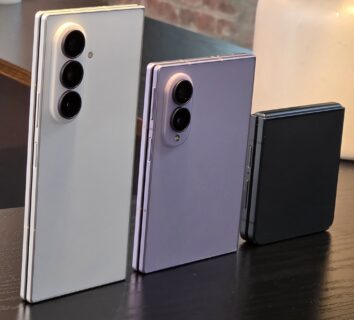
Image source: Smart Analytics Global (SAG)
For the past several years, foldable innovation has largely focused on engineering achievements: making devices thinner, lighter, stronger and more durable. Those improvements remain important, but they are becoming increasingly incremental. The next wave of innovation is likely to come from rethinking the form factor itself, designing foldables around how consumers naturally consume, create and interact with digital content in the AI era.
That transition began last year when Huawei introduced the industry’s first Wide Flip Pura X. The company refreshed with a Wide Fold model Pura X Max earlier this year. Both models have been well received in China.
Samsung has now become the first major global smartphone vendor to embrace a similar design philosophy, bringing the Wide Fold concept into its mainstream foldable portfolio and validating its commercial potential beyond the China market.
SAG believes this marks an important turning point for the industry. Instead of competing solely on hardware specifications, foldable smartphone vendors are beginning to compete on user experience and form-factor innovation. With Apple widely expected to enter the foldable smartphone market later this year with a similar wide fold model, the industry appears to be entering a new era of content-native foldables.
Better Hardware, But That Isn’t the Biggest Story
Samsung has continued refining its foldable portfolio with larger batteries, brighter 3,000-nit displays, slimmer industrial designs, upgraded cameras, Qualcomm’s latest Snapdragon 8 Elite Gen 5 platform and significantly reduced display creases. The Fold models also gain faster 45W charging, while Samsung has increased pricing by approximately US$100 across comparable configurations.
These upgrades undoubtedly strengthen Samsung’s competitiveness and help justify the higher pricing. However, annual improvements in cameras, processors and displays have become expected across the flagship smartphone industry. From SAG’s perspective, the real significance of this launch lies in the introduction of a form factor that fundamentally changes how consumers use foldable smartphones.
The Wide Fold Solves Foldables’ Biggest Usability Challenge
Traditional book-style foldables have always required compromise. Although unfolding the device delivers a large tablet-like display with nearly 1:1 aspect ratio, which is not naturally optimized for most video content. The narrow and elongated outer screen is often less comfortable for everyday tasks such as messaging, web browsing, social media, typing or photography. As a result, many users find themselves repeatedly opening and closing the device throughout the day.
The Galaxy Fold 8 takes a different approach.
Image 2: Samsung Fold 8 front cover display
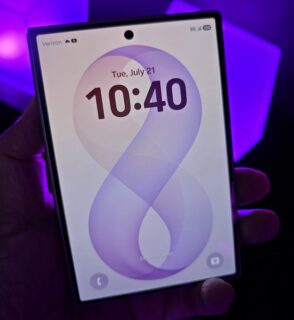
Image source: Smart Analytics Global (SAG)
During SAG’s hands-on evaluation at Galaxy Unpacked, the wider outer display immediately felt more natural for everyday use. At only 201 grams, the device remains easy to carry and operate with one hand, while the 5.5-inch cover display is large enough for most daily interactions. Reading messages, replying to emails, browsing social media, watching short-form videos, taking photos and making calls can all be completed comfortably without unfolding the device.
By comparison, traditional Fold models continue to prioritize productivity over convenience, with cover displays that remain relatively narrow and tall. Flip devices, meanwhile, offer excellent portability but are still constrained by smaller external displays designed primarily for notifications and quick interactions.
The Wide Fold bridges these two experiences. It delivers the portability of a conventional smartphone while preserving the immersive large-screen experience that consumers expect from a foldable device.
The Industry Is Rethinking What Foldables Are Designed For
Perhaps the biggest change is not the hardware itself, but the industry’s understanding of how consumers actually use smartphones.
From SAG’s perspective, smartphones have always served two primary purposes: communication and entertainment. Messaging, voice and video calls, social media, photography, video streaming, gaming and web browsing consistently account for the majority of smartphone usage. Productivity features such as multitasking, split-screen applications and document editing certainly add value, particularly for business users, but they have never been the primary reason most consumers purchase or use a smartphone.
This same principle applies to foldable smartphones.
Over the past several years, smartphone vendors have largely positioned book-style foldables as productivity devices, emphasizing larger displays, multitasking capabilities and PC-like workflows. While these features successfully demonstrate the advantages of a foldable display, SAG believes the industry has placed too much emphasis on productivity and not enough on the everyday experiences that matter most to consumers.
Samsung itself describes the Fold 8 as a “content-native” form factor. SAG believes this accurately captures the direction of the market.
The Wide Fold’s broader aspect ratio (4:3) creates a noticeably better viewing experience for videos, photos and social media compared with both traditional book-style foldables and conventional slab smartphones. When unfolded, the larger inner display also makes more efficient use of screen real estate for widescreen video, reducing black bars and creating a more immersive entertainment experience.
Image 3: Samsung Fold 8 Inner Display Video Content Viewing
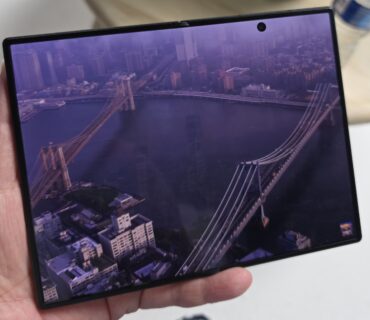
Image source: Smart Analytics Global (SAG)
In other words, the Fold 8 represents a shift in design philosophy, from building foldables primarily for productivity toward designing them around how consumers naturally interact with content every day.
Why Wide Fold Could Become the Dominant Foldable Form Factor
SAG believes the industry is entering a new phase in which foldable smartphones will be optimized around natural human interaction.
A wider cover display enables users to complete most daily tasks without unfolding the device, while still providing the immersive large-screen experience whenever additional screen real estate is needed. This balance between portability and usability addresses one of the biggest compromises that has limited book-style foldables over the past several years.
SAG also believes the Wide Fold form factor has the potential to broaden the addressable market for foldable smartphones.
Traditional book-style foldables have primarily appealed to technology enthusiasts and business professionals seeking productivity benefits. The Wide Fold, by contrast, is designed around mainstream consumer behavior. Its more familiar smartphone-like proportions, lighter weight and improved one-handed usability make it easier to use throughout the day, while also enhancing entertainment experiences such as video streaming, gaming, photography and social media.
Image 4: Samsung Fold 8 Ultra and Fold 8 Side by Side Comparision
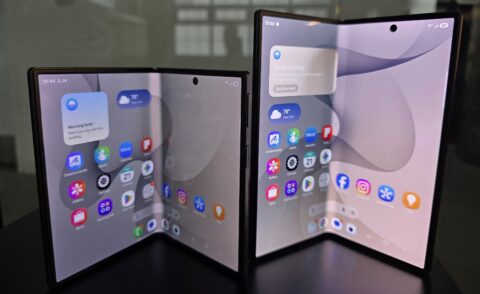
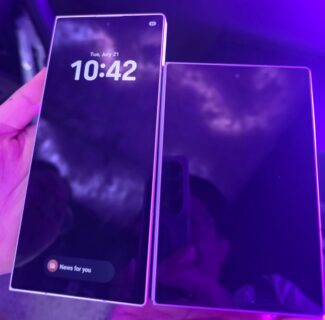
Image source: Smart Analytics Global (SAG)
The more compact and balanced industrial design may also appeal to a broader range of consumers, including female users who often prioritize portability, comfort and everyday usability alongside premium design.
In SAG’s view, foldables should no longer be positioned as niche productivity devices. Instead, they should become premium smartphones that happen to unfold into larger displays when consumers want a more immersive experience.
Apple Will Further Accelerate the Transition
Samsung’s introduction of the Wide Fold comes at an important moment for the broader industry.
SAG expects Apple to launch its first foldable iPhone later this year, marking one of the most significant milestones in the history of the foldable smartphone market. Apple’s entry is expected to dramatically expand consumer awareness, strengthen developer support and encourage broader operator and retail channel investment worldwide.
Apple’s entry into wide fold form factor, as widely anticipated, will further strengthen the industry’s transition toward content-native foldable form factors.
SAG Outlook: The Era of Content-Native Foldables Has Begun
SAG forecasts global foldable smartphone shipments to growth strongly over the next several years, supported by improving hardware maturity, expanding vendor participation and the arrival of Apple’s first foldable iPhone.
Within this broader market, the Wide Fold is expected to emerge as the dominant book-style foldable form factor. SAG forecasts Wide Fold devices will account for approximately 44% of global foldable smartphone shipments in 2026, rising to around 65% in 2027 as more vendors adopt wider cover displays and optimize their software experiences accordingly.
Exhibit 1: Global Foldable Smartphone by Form Factor Forecast: 2026F-2027F
Samsung is expected to remain one of the primary beneficiaries of this transition. SAG forecasts Samsung’s newly launched Fold 8 Ultra, Fold 8 and Flip 8 combined will approach 6 million units in 2026, with the Wide Fold Fold 8 becoming the company’s flagship foldable product.
The first generation of foldables proved that smartphones could fold. The second generation focused on making them thinner, lighter and more durable. Samsung’s Fold 8 signals the beginning of the third generation, in which foldables are no longer designed around engineering achievements, but around how consumers naturally communicate, enjoy entertainment and interact with AI.
Huawei pioneered this direction with the Pura X and Pura X Max. Samsung is now bringing it to the global mainstream. With Apple expected to join the market later this year, SAG believes the foldable smartphone industry is approaching a major inflection point.
The era of content-native foldables has begun.
Clients please click here to access SAG’s comprehensive foldable smartphone vendor share and value share forecast by form factor by region forecast report.