
Smart Analytics Global (SAG) attended Even Realities’ San Francisco event on November 5, 2026, testing the Even G2 AI glasses and R1 smart ring and hearing founder and CEO Will Wang discuss the company’s product strategy.
Executive Summary
- Lightweight and natural design: At just 36 grams, Even G2 is among the most conventional-looking AI glasses SAG has tested, with slim temples and a camera-free, speaker-free design ideal for everyday prescription eyewear users.
- Practical features and intuitive controls: Binocular green displays support translation, notifications, and live transcription, while the R1 smart ring provides intuitive controls and extended battery life.
- Growing developer ecosystem: Even Hub reportedly offers approximately 960 apps and plugins, reflecting the company’s ambition to build an independent AI glasses ecosystem.
- Focused premium positioning: Even Realities targets privacy-conscious consumers and prescription eyewear users, with promising accessibility applications for people who are deaf or hard of hearing.
- SAG perspective: Despite premium pricing and limited market scale, Even Realities’ differentiated, privacy-focused strategy offers meaningful growth opportunities in the evolving AI glasses market.
The Closest AI Glasses to Traditional Eyewear We Have Experienced
At just 36 grams, Even G2 is arguably the most natural-looking pair of AI glasses we have tested so far. Without a camera or speakers, the temples remain remarkably slim, closely resembling conventional prescription glasses rather than the bulkier designs found in many competing AI wearables.
This makes G2 particularly appealing to prescription eyewear users who need to wear glasses throughout the day.
Image 1: Even Reality G2 AI Smart Glasses and R1 Ring
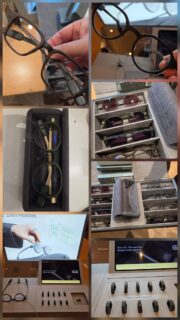
The binocular monochrome green displays support real-time translation, notifications, teleprompting, and other productivity features. Our hands-on experience was generally positive, although the green-only interface still feels less natural and immersive than a full-color display.
Even R1: Intuitive Ring Controls and Longer Battery Life
Another highlight was the Even R1 smart ring, which enables users to activate functions through double taps and navigate displayed content through simple swiping gestures.
Compared with Meta’s Display glasses and neural wristband, which require users to learn a new gesture-based interaction system, we found R1 more intuitive during our initial hands-on testing.
Beyond controlling the glasses, R1 also supports activity, sleep, and health tracking. Its battery lasts approximately 3–4 days under typical usage, while G2 offers up to two days of battery life, depending on usage.
This combination offers practical advantages for everyday wear, although actual battery performance will require longer-term testing.
Even Hub: A Surprisingly Ambitious Developer Ecosystem
One of the biggest surprises was Even Hub, the company’s open application and developer platform.
According to information shared at the event, the ecosystem has attracted developers from North America and Europe and grown to approximately 960 apps and plugins, spanning productivity, lifestyle, AI, entertainment, and other applications.
Image 2: Even Realities SF Event Highlights: CEO Will Wang’s Vision, G2 Design, and Growing Developer Ecosystem
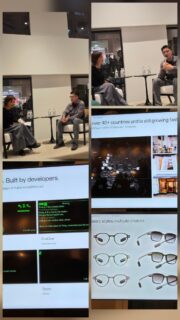
Even Hub is currently free to access for users and developers, although third-party services may introduce separate charges. The platform also supports custom AI agents, suggesting a more flexible AI strategy rather than exclusive dependence on a single model provider.
For a relatively small AI glasses company, this ecosystem ambition exceeded our expectations. Even Realities is clearly looking beyond hardware toward a broader software and developer platform.
A Focused Premium Strategy, with Privacy as a Differentiator
During the fireside chat, CEO Will Wang emphasized a pragmatic product strategy focused on a premium, targeted consumer segment rather than competing directly with mass-market AI glasses vendors.
The company currently has no plans to add speakers, while full-color displays remain a longer-term consideration as technology matures and costs decline.
Even Realities has expanded into more than 40 countries, with the US representing over half of its business, according to information shared at the event. Beyond direct online sales, the company is developing partnerships with optical retailers and independent opticians, particularly in North America and Europe.
We also noticed several attendees with hearing impairments at the San Francisco event. For people who are deaf or hard of hearing, Even G2 could offer meaningful accessibility benefits through real-time speech-to-text transcription, allowing them to read what others are saying directly on the glasses’ displays during face-to-face conversations.
This represents a particularly compelling use case for display-equipped AI glasses, extending their value beyond convenience and productivity to improving everyday communication and accessibility.
Importantly, the absence of a camera is becoming a potential competitive advantage, particularly as consumer privacy concerns surrounding camera-equipped AI glasses continue to grow.
Premium Pricing Remains a Barrier
Even G2 starts at US$599, while the R1 smart ring costs an additional US$249.
Prescription lenses can increase the total cost substantially, depending on lens specifications. Although eligible US customers may use HSA/FSA funds and potentially receive vision insurance reimbursement, out-of-pocket expenses can remain significant. Non-prescription purchases generally have more limited eligibility.
This pricing reinforces Even Realities’ premium positioning but also limits its near-term mass-market potential.
SAG Perspective: Small but Beautiful, with Room to Grow
SAG believes Even Realities has established a clear and differentiated position in the rapidly evolving AI glasses market.
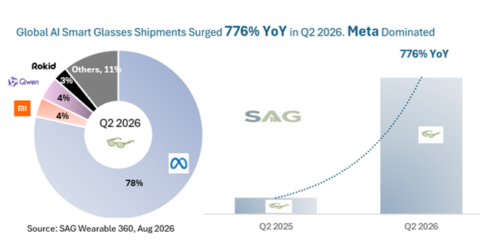
While Meta continues to dominate global AI glasses shipments, Even Realities remains a much smaller player based on SAG’s preliminary 1H 2026 market assessment.
Exhibit 1: Global AI Smart Glasses Vendor Share: Q2 2026
However, its lightweight design, prescription-friendly approach, privacy-conscious hardware choices, intuitive ring interaction, and growing developer ecosystem give it a distinctive value proposition.
Rather than pursuing every possible feature, Even Realities is focusing on making AI glasses look and feel like something consumers would genuinely want to wear every day.
SAG believes this focused, premium, and relatively niche strategy could create meaningful growth opportunities, especially among prescription eyewear users, people who are deaf or hard of hearing, and privacy-conscious consumers.
The key challenges ahead will be expanding retail distribution, strengthening the application ecosystem, improving display technology, and gradually reducing the total cost of ownership
Disclaimer: This article is not sponsored or paid for by Even Realities or any other party. All hands-on observations, analysis, and opinions expressed herein are independently developed by Smart Analytics Global (SAG) and reflect SAG’s own research and professional judgment.