
The global mobile device market is entering a new transition cycle from 2026 onwards. While near-term demand may remain mixed due to higher prices, supply constraints, and longer replacement cycles, the industry is moving into a new era defined by AI-native experiences, new device form factors, and the road to 6G. Based on SAG’s market tracking and industry analysis, below are five mega trends that will reshape the mobile ecosystem and value chain from 2026 onward.
2026 Faces Pressure—2027 Brings Stabilization
SAG expects 2026 to remain under pressure as device prices stay elevated and supply conditions remain tight across key components. These headwinds will likely weigh on mass-market demand and extend replacement cycles. However, 2027 would bring stabilization or a modest rebound, supported by pent-up demand and gradually improving supply-side conditions.
From Apps to AI Agents: A Slow-Cooking UI Shift
For nearly two decades, smartphones have been built around an app-based user experience. Now, the industry is beginning a shift toward AI agent-powered smartphones, where users increasingly “ask and delegate” rather than “search and tap.” This transition will not happen overnight—privacy, security, and ecosystem restrictions will slow adoption—but SAG believes AI agents will become a major interface layer that reshapes how consumers interact with smartphones.
New AI-Native Devices Are Emerging—Who Wins the Next Interface War?
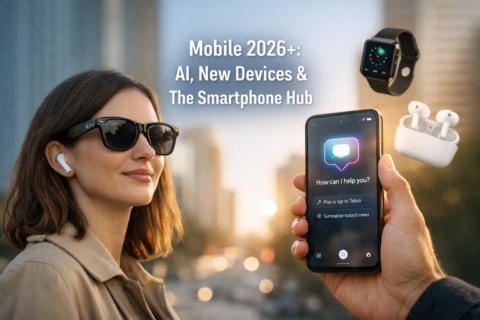
A new wave of AI-native devices is emerging rapidly, including smart glasses, AI earbuds, smartwatches, rings, AI pins/pendants, and smart pens, along with AI-enabled PCs, cars, and home devices. Each category unlocks unique use cases—hands-free vision, always-on voice, health sensing, or contextual computing. The market is still experimenting, and the next “super entry point” for AI has not been decided. The race has only just begun.
Smartphones Stay the Control Hub—New Devices Complement, Not Replace
Despite the rise of new form factors, SAG does not expect smartphones to disappear in the next five years. Smartphones remain uniquely positioned as the trusted control center for daily life, combining a large screen for verification, secure authentication, payments, permissions control, cellular connectivity, and the deepest app ecosystem. In practice, wearables and AI-native devices will expand the AI experience and become the always-on front end for voice, vision, and context—but smartphones will remain the central hub that ties everything together.
6G Is on the Horizon—and It Will Redefine the Value Chain
While 6G is still in early research and pre-standardization stages, most industry roadmaps point to commercialization around 2030, with broader adoption extending into the early 2030s. Compared with 5G, 6G is expected to evolve toward real-time, intelligent, hybrid connectivity across multiple environments and device categories. This next connectivity cycle will reshape the mobile value chain, shifting competition from basic speed and coverage toward AI-native, programmable, and enterprise-driven network services.
Final Takeaway
Mobile 2026+ will be defined by a new combination of forces: pricing pressure in the near term, a longer-term shift from apps to AI agents, rapid experimentation across new AI-native devices, and the longer runway toward a 6G-driven ecosystem reset. SAG expects the winners to be those who can balance supply chain resilience with platform control—and commercialize AI experiences at scale across mainstream price tiers.
Clients, please click here to access the full published report.