
Key Takeaways:
- Apple is reportedly developing its own screenless wristband, targeting the growing market for display-free wearables and positioning itself to compete with WHOOP, Google Fitbit, Garmin, and other players.
- According to Smart Analytics Global (SAG) estimates, the non-display band segment surged 122% YoY in Q2 2026 and is projected to grow 109% in 2026, drastically outperforming true smartwatches (+7% in 2026) and basic bands (-9%).
- Consumers are increasingly opting for screenless bands to avoid constant wrist notifications, screen glare, and visual distractions while maintaining 24/7 health tracking.
- Unlike daily-charged smartwatches, non-display bands offer multi-day battery life (4 to 7+ days) and seamless charging mechanisms that prevent gaps in round-the-clock health logging.
- A non-display band allows Apple to retain health-focused users within its ecosystem before they migrate to competitors like Whoop or Google Fitbit Air, creating a net-additive revenue line alongside the Apple Watch. We believe a wide user base of Apple watches and the flexibility business model will become the key advantage for Apple.
Apple is reportedly working on a non-display wearable (via Bloomberg), a simple device similar to Whoop or Google Fitbit Air. While the product is not expected to launch anytime soon and could arrive in 2028 or later, we believe it would be a very wise move for Apple. Here are our thoughts.
Non-Display Bands Are the Growth Engine for the Wrist Wearable Market
According to Smart Analytics Global (SAG) wearable 360 service, the global non-display band market grew 122% YoY in Q2 2026. The market is forecast to grow 109% YoY in 2026 and another 48% YoY in 2027.
Exhibit 1: Global Non-Display Bands Volume YoY% 2025-2027F
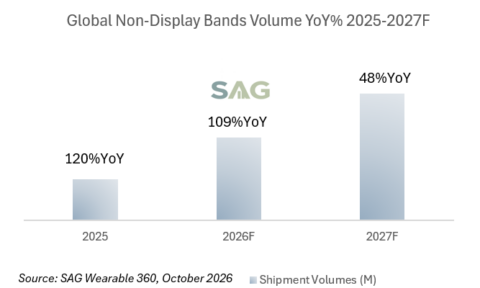
Exhibit 2: Global Non-Display Band Market Share by Vendor Q2 2026
This clearly indicates that the market is on a run, growing with every passing quarter and every passing year. In comparison, growth in the true smartwatch market is more limited. For example, the segment grew just 10% YoY in Q2 2026 and is forecast to grow 7% YoY in 2026 and 4% YoY in 2027.
The situation is even worse for basic bands and watches. The segment is forecast to decline 9% YoY in 2026, followed by a further 3% YoY decline in 2027.
These numbers make it clear that non-display bands are emerging as the growth engine for the wrist wearable market. Apple should not shy away from entering this segment and reaping its benefits.
Apple Is Already Moving Towards a More Health-Focused Experience
Although Apple has not launched a non-display band, we have already seen some developments that could indicate the company’s growing focus on health monitoring very similar to bands like Whoop. Apple Watch has already been a benchmark in health tracking in the recent past but now they are even pushing further.
For example, Whoop offers a screenless band that measures heart rate every second for 24 hours a day. In comparison, the Apple Watch Series 11 measured heart rate at intervals of around five minutes. With the launch of the Apple Watch Series 12, Apple has reportedly reduced this interval significantly, from around five minutes to every five seconds.
Whoop was gradually becoming the go-to option for athletes and health-conscious consumers, and Apple did not want to lose its share of this market. It has also started adopting some of the features and approaches associated with Whoop, including more frequent heart rate measurements and a simplified app interface.
These developments indicate how serious Apple is with health tracking and taking bold steps to make it better. The company is modifying its products accordingly and may be this is the first indication of them launching a non-display band in the near future.
Why Are Non-Display Bands Gaining Popularity?
There are multiple factors behind the growing popularity of non-display bands over traditional smartwatches and basic bands.
1. Health Benefits and Continuous Monitoring
The accuracy of screenless bands from companies such as Whoop is pretty good, making them attractive to consumers who prioritize health monitoring.
As discussed earlier, these devices measure heart rate more frequently and offer additional health-related parameters. This is one of the reasons consumers are switching to devices such as Whoop.
For people who are serious about tracking their health and fitness, having access to detailed and frequent health measurements is an important consideration.
2. Digital Detox and a Screen-Free Experience
Another factor is that certain consumers are looking for a wearable without a display.
By opting for a screenless band, they do not have to look at another display throughout the day. They may not want to see health metrics all the time and prefer to avoid the constant distraction of a screen.
This focus on digital detox is another reason non-display bands are gaining popularity. Consumers can continue tracking their health without having another screen competing for their attention.
3. Longer Battery Life and Convenient Charging
The third factor is battery life. Non-display bands offer tremendous battery life compared with traditional smartwatches.
For example, Whoop can last 4 to 5 days on a full charge. Google Fitbit Air can also last a week or more, while similar battery-life advantages are offered by devices such as Noise Rep and Amazfit Helio Strap.
Traditional smartwatches, on the other hand, often need to be charged daily. For people who are deeply interested in health tracking, can find removing their wearable every day for charging to be as a trun off.
Whoop also offers the convenience of charging while the device is on the wrist, reducing the need to remove it for charging. Whereas a True Smartwatch generally needs to be removed for charging daily or once in two days.
This is another important factor contributing to the shift towards screenless bands.
4. The Ability to Wear a Traditional Watch
Another factor driving the adoption of non-display bands is fashion.
Consumers with disposable income may not want to compromise on wearing their favorite fashionable analog watches. These could be watches from brands such as Armani Exchange, Emporio Armani, Rolex, or Omega, etc.
Wearing a true smartwatch alongside a traditional analog watch can look somewhat odd to some consumers. A non-display band, however, offers a more discreet alternative. Consumers can wear a screenless band on one wrist and their preferred analog watch on the other.
This allows them to continue tracking their health without giving up the traditional watch they enjoy wearing.
Together, these factors are contributing to the growing popularity of non-display bands and creating an opportunity for Apple to enter the category.
Will a Non-Display Band Cannibalize Apple Watch Sales?
We think the reasons discussed above are sufficient to justify Apple’s entry into the non-display band market. However, there is another important question: if Apple launches such a product, will it cannibalize sales of the Apple Watch?
We believe a non-display band could support Apple’s overall wearable revenue rather than necessarily hurting it.
Consumers who prefer an Apple Watch will continue to buy one. However, there are also consumers who prefer a screenless band for various reasons, including health monitoring, longer battery life, digital detox, and the ability to wear a traditional watch.
If these consumers decide to move away from the Apple Watch, Apple could offer them an alternative within its own ecosystem. They could pair it with a traditional analog watch or use it on its own, depending on their preferences.
In other words, it is not necessarily a losing proposition for Apple. Instead, it could be a win-win situation for the company.
By launching its own non-display band, Apple could retain some of these consumers within its ecosystem and generate additional wearable revenue from a growing market segment.
In addition, Apple’s large installed base of Apple Watch users provides a sizable addressable market for non-display bands. If Apple adopts a more flexible business model, allowing consumers to choose between an outright purchase, a monthly subscription, or a hybrid option, it could offer greater flexibility and pose a significant competitive challenge to WHOOP’s subscription-based model.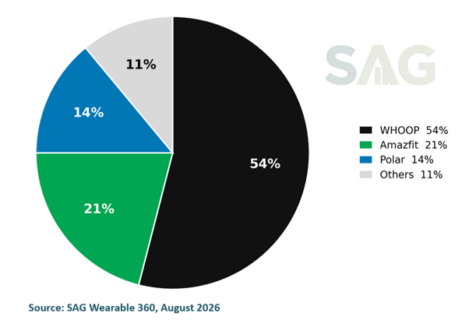
Conclusion
The non-display band market is emerging as an important growth opportunity within the wrist wearable industry. Strong growth, an increasing focus on health monitoring, longer battery life, digital detox, and fashion preferences are all contributing to its popularity.
Apple has already demonstrated a growing emphasis on health-related features in its smartwatches. A dedicated non-display band could be a natural extension of this strategy.
While the possibility of cannibalization cannot be ruled out, the bigger opportunity is for Apple to retain consumers who might otherwise switch to competing products.
Therefore, we believe that launching a non-display band could be a wise move for Apple, supporting its overall wrist wearable revenue while allowing it to participate in one of the fastest-growing segments of the market.
SAG clients please click here to access our comprehensive wrist wearables report, featuring vendor shipment and value share tracking, along with market forecasts through 2027 across 12 regions and countries.